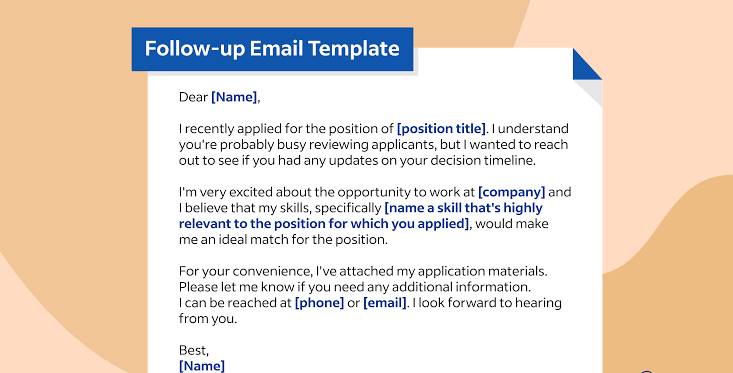
Master the art of checking in. You have spent hours tailoring your CV, writing a cover letter, and carefully filling out the application form. You hit submit and wait. And wait. Days turn into weeks, and the silence is deafening. You want to follow up, but you are terrified of coming across as impatient, pushy, or desperate. This guide gives you the exact scripts and strategies for how to follow up on a job application without being annoying. With the right approach, you can check in professionally and increase your chances of getting a response.
When Should You Follow Up?
Timing is everything. Follow up too soon, and you seem impatient. Follow up too late, and you might miss the opportunity entirely.
General Rule: Wait one to two weeks after submitting your application before following up. If the job listing specified a decision date, wait until that date has passed.
For online applications: Many companies use applicant tracking systems that sort through hundreds of CVs. A week to ten days allows time for human review.
If you were referred by someone: Your contact may have given you a specific timeline. Follow their guidance.
If you had an interview: Wait one week after the interview before checking in. If you were given a specific date for a decision, wait until that date passes.
How to Follow Up Without Being Annoying
The key to a successful follow-up is to come across as enthusiastic and professional, not desperate or demanding. Here are the principles.
1. Lead with Gratitude, Not Expectation
Start your message by thanking the person for their time or consideration. This sets a positive tone.
2. Be Brief
Recruiters are busy. Your follow-up should be short and to the point. Three to five sentences is plenty.
3. Reiterate Your Interest
Remind them why you are excited about the role and the company. This shows you are genuinely interested, not just sending mass applications.
4. Add Value
If possible, include a small update—a new project you have completed, a certification you have earned, or an insight about their company. This reminds them why you are a great candidate.
5. Provide Your Contact Details
Make it easy for them to respond. Include your phone number and email address in your signature.
6. Be Polite and Patient
End with a polite note that you understand they are busy and appreciate their time.
Scripts for Following Up
Script 1: Following Up After Submitting an Application (No Interview Yet)
Use this when you have not heard back after submitting your application.
Subject: Following Up on Job Application – [Your Name] – [Job Title]
Dear [Hiring Manager Name],
I hope this email finds you well. I submitted my application for the [Job Title] position on [Date] and wanted to check in on the status of my application.
I remain very interested in this role and in contributing to [Company Name]. I have been following [company’s recent work or news] and am excited about the possibility of bringing my skills in [mention a key skill] to your team.
Please let me know if there is any additional information I can provide.
Thank you for your time and consideration.
Best regards,
[Your Name]
[Your Phone Number]
[Your Email]
Script 2: Following Up After an Interview
Use this after you have had an interview and are waiting for a decision.
Subject: Thank You and Follow-Up – [Your Name] – [Job Title] Interview
Dear [Interviewer Name],
I hope you are having a good week. I wanted to thank you again for the opportunity to interview for the [Job Title] position on [Date]. I enjoyed learning more about the team and the exciting projects at [Company Name].
I wanted to check in and ask if there is any update on the hiring timeline. I remain very interested in this role and am confident that my experience in [mention a key skill or experience] would allow me to contribute meaningfully to your team.
Please let me know if there is anything else I can provide.
Thank you for your time and consideration.
Best regards,
[Your Name]
[Your Phone Number]
[Your Email]
Script 3: Following Up When You Have an Update
Use this when something has changed since you applied—a new certification, a project, or a professional achievement.
Subject: Update to Job Application – [Your Name] – [Job Title]
Dear [Hiring Manager Name],
I hope this email finds you well. I submitted my application for the [Job Title] position on [Date] and wanted to share an update.
Since applying, I have [briefly describe your update, e.g., completed a certification in project management, successfully launched a new initiative at my current role]. I believe this further strengthens my fit for the position.
I remain very interested in joining [Company Name] and would welcome the opportunity to discuss how my skills can contribute to your team.
Thank you for your time.
Best regards,
[Your Name]
[Your Phone Number]
[Your Email]
Script 4: Short Follow-Up (For LinkedIn or Quick Messages)
Use this when you are messaging through LinkedIn or a company portal.
Hi [Name], I hope you are well. I submitted my application for the [Job Title] role on [Date] and wanted to check in on the status. I remain very interested in this opportunity and would love to hear if there are any updates. Thank you for your time.
What to Avoid When Following Up
Do Not Email Every Day. One follow-up is enough. A second follow-up may be appropriate after another week or two, but space them out.
Do Not Use Demanding Language. Avoid phrases like “I have not heard back yet,” “I am waiting for your response,” or “Please get back to me as soon as possible.” These sound impatient.
Do Not Overshare. You do not need to explain why you need the job (bills, family, etc.). Keep it professional.
Do Not Contact Multiple People in the Same Company. Unless you are instructed otherwise, contact only the person who posted the job or who interviewed you.
Do Not Threaten to Withdraw. Saying you have other offers may pressure them, but it can also backfire. Only mention other offers if you genuinely have one and need a decision.
Do Not Send Attachments. Do not attach a new version of your CV or cover letter unless asked. It suggests you did not send the correct version in the first place.
How to Follow Up by Phone
Sometimes a phone call is appropriate, especially if the company is small or you have been given a number to contact. Follow these rules:
Call Once, Not Repeatedly. If you call and no one answers, leave a brief, professional voicemail and wait for a return call.
Keep It Brief. If you reach someone, quickly introduce yourself, state the purpose of your call, and ask if there is an update. Do not launch into your life story.
Be Polite. If they say they are still reviewing applications, thank them and ask when you might check back. Note that date.
Script for a Phone Follow-Up:
“Hello, this is [Your Name]. I submitted an application for the [Job Title] position and am calling to check on the status. I remain very interested in this role and wanted to see if there is any update. I appreciate your time.”
What If You Get No Response?
Sometimes, despite your best efforts, you never hear back. This is frustrating but common. If you have followed up once or twice and still have no response, it is time to move on.
Reasons You Might Not Hear Back:
-
The position has been filled and they have not updated all applicants
-
They are still in the early stages of review
-
Your application did not advance
-
The recruiter is overwhelmed with applications
What to do next: Keep applying to other roles. Do not take silence personally. The right opportunity will come.
Frequently Asked Questions (FAQ)
Q1: How many times should I follow up?
A1: One follow-up after the initial application and one follow-up after an interview is usually sufficient. If you were given a specific timeline, wait until that timeline passes. A second follow-up (after another week or two) may be acceptable, but no more than three total contacts.
Q2: What if I do not have the hiring manager’s email?
A2: Check the job posting for a contact. If none is provided, you can contact the company’s general HR or careers email. Alternatively, use LinkedIn to find the appropriate person and send a polite message.
Q3: Should I follow up via LinkedIn or email?
A3: Email is preferable if you have it. LinkedIn can work, but only if you are already connected or if the profile indicates they are open to messages. Keep LinkedIn messages shorter and more casual.
Q4: What if the job posting says “No phone calls”?
A4: Respect that. Do not call. Use email instead. If the posting says no follow-ups at all, you should still follow up, but keep it very brief and polite.
Q5: How soon is too soon to follow up?
A5: Less than one week after submitting an application is generally too soon. If you had an interview, less than one week is also too soon unless you were given a specific deadline.
Q6: What should I do if my follow-up is ignored?
A6: If you have followed up once and received no response, wait another week and send a polite, brief message. If that is also ignored, it is time to move on. Keep applying elsewhere.
Q7: Can I ask for feedback if I was rejected?
A7: Yes. If you received a rejection, you can politely ask for feedback to improve future applications. Keep it brief and thank them for their time.
Conclusion
Following up on a job application is a skill. Done well, it shows initiative, professionalism, and genuine interest. Done poorly, it can annoy recruiters and hurt your chances. Use the scripts in this guide, respect the timeline, and always lead with politeness.
Remember: a follow-up is a check-in, not a demand. You are simply asking for an update, reminding them of your interest, and showing that you are proactive. That is a quality employers value.
Be patient. Be professional. Keep applying. Your opportunity will come.