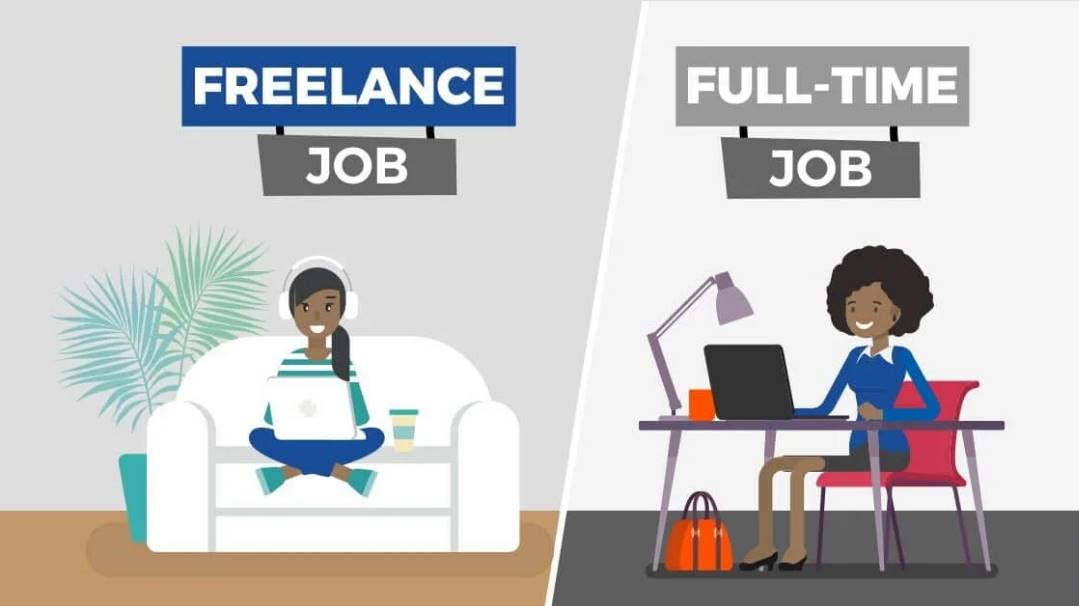
Confused by the gig economy? You are not alone. The world of work has changed dramatically. The traditional nine-to-five job is no longer the only path to a stable income. Two popular alternatives have emerged: fractional work and freelancing. At first glance, they may seem similar—both involve working for multiple clients, both offer flexibility, and both are growing rapidly. But they are fundamentally different in how they operate, how you get paid, and how they affect your career.
This guide breaks down the key differences between fractional work and freelancing to help you choose the most profitable and stable path for your skills and lifestyle.
What Is Fractional Work?
Fractional work is when a professional works for multiple companies on a part-time, ongoing basis. Instead of being a full-time employee at one company, you split your time between two or three organisations. Each company treats you like a team member, but only for a portion of the week.
Fractional work is most common in roles where strategic expertise is valuable, but a full-time employee is not needed. The goal is to provide the value of a senior professional without the cost of a full-time salary.
Fractional work is most common in roles where strategic expertise is valuable, but a full-time employee is not needed. The goal is to provide the value of a senior professional without the cost of a full-time salary.
Example: A fractional Chief Financial Officer (CFO) works for three different startups. They spend two days a week with each company, providing financial strategy, oversight, and reporting.
Who does it: Senior professionals—CFOs, CMOs, HR directors, operations leaders, and experienced legal or financial experts. Increasingly, product managers, marketing strategists, and software developers are also offering fractional services.
What Is Freelancing?
Freelancing involves working on specific projects or tasks for clients on a per-project basis. You complete the work, deliver it, and move on to the next client. Freelancers are typically hired to execute specific tasks rather than provide ongoing strategic direction.
Example: A freelance graphic designer is hired to create a logo for a new business. Once the logo is delivered and approved, the project is complete. The designer may or may not work with that client again.
Who does it: Writers, graphic designers, web developers, photographers, translators, and other skilled professionals who work on specific deliverables.
Key Differences at a Glance
| Aspect | Fractional Work | Freelancing |
|---|---|---|
| Engagement | Ongoing, long-term | Project-based, often short-term |
| Client Relationship | Part of the team | External service provider |
| Income Stability | High—regular retainer | Varies—depends on projects |
| Depth of Work | Strategic, involved | Task-oriented, delivery-focused |
| Availability | Regular, committed hours | Flexible, project-dependent |
| Pay Structure | Monthly retainer or hourly | Per project or milestone |
| Job Security | Higher | Lower |
| Work-Life Balance | Structured | Highly flexible but sometimes unpredictable |
Fractional Work: The Pros and Cons
Pros of Fractional Work
Income Stability
With fractional work, you typically have a steady monthly income from retainers. If you have two or three clients paying a fixed amount each month, you have a predictable cash flow.
Meaningful Impact
You are not just completing tasks—you are part of the company’s decision-making. Your work has a real impact on strategy and growth.
Professional Growth
Working at a senior level with multiple companies exposes you to a variety of industries and challenges. This experience makes you more valuable over time.
Better Work-Life Balance
Fractional roles are often capped at a certain number of hours per week, so you can maintain a healthier balance than freelancers who work overtime to meet project deadlines.
Cons of Fractional Work
Higher Barrier to Entry
Most fractional roles require senior-level experience. Companies want seasoned professionals who can deliver strategic value immediately.
Less Flexibility
You have committed hours each week. You cannot disappear for a week without disrupting your clients’ operations.
More Responsibility
You are accountable for outcomes, not just deliverables. If the company does not perform well, you share the burden.
Administrative Overhead
You are essentially running a small agency—handling contracts, invoicing, taxes, and client relationships for multiple clients.
Freelancing: The Pros and Cons
Pros of Freelancing
Maximum Flexibility
You choose when you work, where you work, and for whom you work. There is no fixed schedule unless a project requires it.
Variety of Work
Every project is different. You can work across industries, with different clients, and on different types of projects.
Lower Barrier to Entry
You can start freelancing with a single skill and a phone or a laptop. No senior-level experience is required.
Quick Income
You can start earning immediately. If you have a skill in demand, you can find a project quickly.
Cons of Freelancing
Inconsistent Income
Your income fluctuates. One month you may have multiple projects, the next month you may have none.
No Long-Term Commitment
Clients may not come back. You are constantly looking for new work.
Isolation
Freelancing can be lonely. You are not part of a team, and there is no one to bounce ideas off.
You Are The Business
You are responsible for everything: finding clients, negotiating contracts, invoicing, and tax compliance.
Which Is Better for You?
Choose Fractional Work If:
-
You have senior-level experience in your field
-
You want a predictable monthly income
-
You enjoy strategic work and being part of a team
-
You are comfortable managing multiple client relationships
-
You are looking for stable, meaningful work without a full-time job
Choose Freelancing If:
-
You are just starting and building a portfolio
-
You want maximum flexibility and variety
-
You are comfortable with fluctuating income
-
You enjoy project-based work and completing specific tasks
-
You want to test the waters before committing to a career path
The Hybrid Approach
You do not have to choose one or the other. Many professionals combine fractional and freelance work. You could have one or two fractional clients for stable income and take on freelance projects for variety and extra earnings. This hybrid approach allows you to enjoy the benefits of both worlds while mitigating the downsides of each.
Frequently Asked Questions (FAQ)
Q1: Do I need a degree to do fractional work?
A1: Most fractional roles require significant experience, not necessarily a degree. Companies want proven expertise in a specific area. If you can demonstrate deep knowledge and results, you can find fractional work.
Q2: Can I do fractional work part-time?
A2: Yes. Fractional work is part-time by design. You typically work a set number of days or hours per week for each client.
Q3: What if I cannot find fractional clients?
A3: Fractional work is most common at the senior level. If you are early in your career, freelancing may be a better option to gain experience and build a portfolio. The two paths are not mutually exclusive—many people start with freelancing and transition to fractional work as they gain experience.
Q4: What is the earning potential of fractional work?
A4: Fractional rates are typically higher than freelancing rates because you are providing strategic value. Senior fractional professionals can earn ₦500,000–₦2,000,000 per month across multiple clients.
Q5: What is the earning potential of freelancing?
A5: Freelancing rates vary widely depending on your skill, experience, and the market. Beginners may earn ₦20,000–₦50,000 per project, while experienced professionals can earn ₦100,000–₦1,000,000+ per month.
Q6: Can I combine fractional and freelance work?
A6: Yes. This is a smart strategy. Fractional work provides a stable income. Freelance projects provide variety, flexibility, and extra earnings. The hybrid approach is becoming increasingly common.
Conclusion
The gig economy offers more choices than ever before, but the best choice depends on your experience, goals, and lifestyle. Fractional work offers stability, depth, and meaningful impact, but it requires senior-level experience. Freelancing offers flexibility, variety, and a lower barrier to entry, but it comes with income uncertainty and the constant need to find new clients.
Neither is better than the other. They are different paths serving different needs. Consider your career stage, your financial goals, and your preferred work style. If you are just starting, freelancing may be your best entry point. If you have years of experience and want a predictable income, fractional work is a compelling alternative to a full-time job.
The good news is that you do not have to choose forever. You can pivot, experiment, and find what works best for you. The gig economy is flexible—take advantage of it.