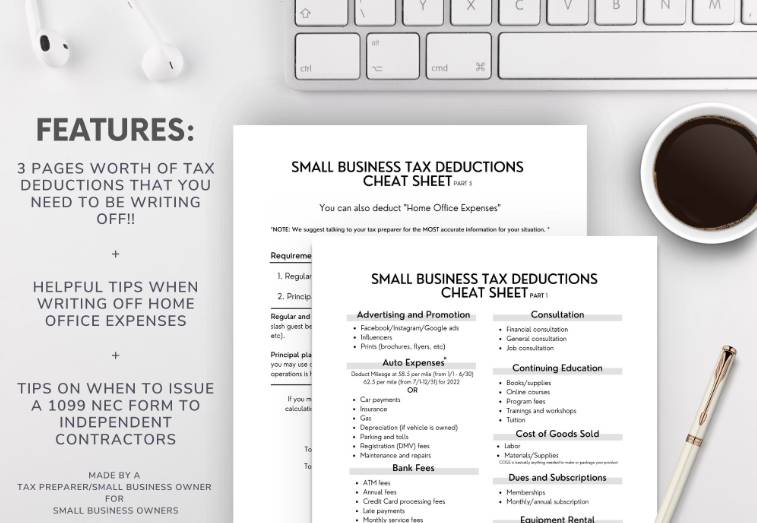
Keep more of your hard-earned money. Every naira you spend running your business is money that should not be taxed. But many small business owners pay more tax than necessary simply because they do not know what expenses they can deduct. Tax deductions reduce your taxable profit. Lower profit means lower tax.
This guide is your complete cheat sheet for small business tax deductions in Nigeria. Use it to track your expenses throughout the year and share it with your accountant at tax time.
What Is a Tax Deduction?
A tax deduction is an expense you can subtract from your business income before calculating your tax. The formula is simple:
Business Income – Allowable Expenses = Taxable Profit
You pay tax on the taxable profit. Every legitimate business expense you claim reduces your tax bill. But there are rules. Expenses must be incurred wholly, exclusively, and necessarily for your business. They cannot be personal expenses disguised as business costs.
Categories of Tax Deductions
Here are the major categories of expenses you can deduct. Keep receipts for every single one.
1. Cost of Goods Sold (COGS)
If you sell physical products, the cost of those products is deductible. This includes:
-
Raw materials
-
Packaging materials
-
Direct labour costs for production
-
Shipping and freight for incoming goods
-
Storage and warehousing costs
Do not deduct the full purchase price of inventory you have not sold yet. Only deduct items sold during the tax year.
2. Rent and Utilities
If you rent space for your business, the rent is fully deductible. This includes:
-
Shop or office rent
-
Warehouse rent
-
Storage space rent
If you work from home, you can deduct a portion of your home expenses. Calculate the percentage of your home used exclusively for business. Deduct that percentage of your rent, electricity, water, and security.
3. Salaries and Wages
Payments to employees are deductible. This includes:
-
Salaries and wages
-
Bonuses
-
Pension contributions
-
PAYE tax remitted on behalf of employees
-
Staff training costs
You cannot deduct your own salary if you are a sole proprietor. Your drawings are not a business expense.
4. Marketing and Advertising
Any cost to promote your business is deductible. This includes:
-
Social media ads
-
Google and Facebook ads
-
Flyers and brochures
-
Billboard and radio advertising
-
Website hosting and maintenance
-
Business cards
-
Sponsorships
5. Transportation and Travel
Costs of moving for business purposes are deductible. This includes:
-
Fuel for business trips
-
Vehicle maintenance and repairs
-
Insurance for business vehicles
-
Public transport fares for business trips
-
Airfare for business travel
-
Hotel accommodation on business trips
-
Meals while travelling for business
Keep a log of business versus personal travel. Only the business portion is deductible.
6. Professional Fees
Fees paid to professionals who help your business are deductible. This includes:
-
Accountant fees
-
Legal fees
-
Consultant fees
-
Business registration and renewal fees
7. Bank Charges and Interest
Costs of banking and borrowing for your business are deductible. This includes:
-
Bank account maintenance fees
-
POS transaction fees
-
Interest on business loans
-
Interest on business overdrafts
-
Credit card processing fees
8. Office Supplies and Equipment
Costs of running your office are deductible. This includes:
-
Stationery and printing
-
Pens, paper, files
-
Printer ink and toner
-
Small tools and equipment under ₦50,000
-
Computer software and subscriptions
Larger equipment like computers, furniture, and machinery is not fully deductible in the year of purchase. They are depreciated over several years.
9. Communication Costs
Costs of staying connected are deductible. This includes:
-
Business phone line
-
Business mobile phone bills
-
Internet subscription
-
Postage and courier services
If you use your personal phone for business, deduct the business portion.
10. Insurance
Business insurance premiums are deductible. This includes:
-
Public liability insurance
-
Property insurance
-
Professional indemnity insurance
-
Vehicle insurance for business vehicles
-
Workers’ compensation
11. Repairs and Maintenance
Costs to keep your business assets in working order are deductible. This includes:
-
Equipment repairs
-
Building repairs
-
Vehicle repairs
-
Generator maintenance
Major improvements that increase the value of an asset are not deductible as repairs. They are capitalised and depreciated.
12. Training and Development
Costs to improve your skills or your staff’s skills are deductible. This includes:
-
Courses and workshops
-
Conference fees
-
Training materials
-
Professional membership fees
13. Bad Debts
If you sell to customers on credit and they do not pay, you can deduct the unpaid amount as a bad debt. You must show you have tried to recover the money.
14. Depreciation
Large assets like machinery, computers, vehicles, and furniture are not fully deductible in one year. Instead, you deduct a portion each year over the asset’s useful life. This is called depreciation. The Nigerian tax law sets specific rates for different asset types.
Common depreciation rates:
-
Computers and office equipment: 25% per year
-
Furniture and fittings: 10% per year
-
Motor vehicles: 25% per year
-
Plant and machinery: 10% to 15% per year
15. Capital Allowances
Nigeria’s tax law also provides capital allowances, which are similar to depreciation but often more generous. For small businesses, the annual investment allowance allows you to deduct a percentage of qualifying capital expenditure in the year of purchase. Consult your accountant to maximise these.
What You Cannot Deduct
Some expenses are not deductible, no matter how business-related they feel:
-
Personal expenses (clothing, personal meals, personal travel)
-
Drawings (money you take for yourself)
-
Fines and penalties
-
Political contributions
-
Gifts (generally limited or not deductible)
-
Capital invested in the business
Record Keeping Essentials
To claim deductions, you must have proof. Keep these records:
Receipts. Keep every receipt for every business expense. Digital photos of receipts are acceptable.
Invoices. Keep copies of invoices you receive from suppliers.
Bank Statements. Use a separate business bank account. This makes tracking expenses much easier.
Mileage Log. If you use a personal vehicle for business, keep a log of dates, destinations, and purposes.
Contracts. Keep copies of contracts with suppliers and clients.
The tax authorities can audit your returns for up to six years. Keep your records that long.
How to Maximise Your Deductions
Use a Separate Business Account. Mixing personal and business expenses makes tracking deductions nearly impossible. Open a dedicated business account.
Record Expenses Immediately. Do not wait until tax time. Record expenses as they happen. Your memory will fail you.
Talk to Your Accountant Early. Do not wait until the filing deadline to ask what is deductible. Review your expenses with your accountant quarterly.
Prepay Expenses. If you have cash at year’s end, consider prepaying expenses for the next year. Rent, insurance, and subscriptions can be prepaid and deducted in the current year.
Time Large Purchases. If you plan to buy equipment, consider timing it to maximise tax benefits in high-profit years.
Frequently Asked Questions (FAQ)
Q1: Can I deduct expenses if I do not have receipts?
A1: You need proof. Without receipts or bank statements showing the payment, tax authorities may disallow the deduction. Keep your records.
Q2: Can I deduct my home rent if I work from home?
A2: Yes, but only the portion used exclusively for business. Calculate the percentage of your home used for business and deduct that percentage of rent, utilities, and security.
Q3: Can I deduct meals with clients?
A3: Meals with clients are generally deductible if they are directly related to business discussions. Keep records of who you met and what was discussed.
Q4: What is the difference between depreciation and capital allowance?
A4: Depreciation is an accounting concept. Capital allowances are the tax rules for deducting asset costs. Your accountant will calculate both.
Q5: Can I deduct my phone and internet if I use them personally too?
A5: Yes, but only the business portion. Estimate the percentage of time used for business and deduct that percentage of the bill.
Q6: What happens if I claim a deduction I am not entitled to?
A6: If caught, you will owe the tax plus penalties and interest. Intentional false claims can lead to prosecution. Be honest and work with a qualified accountant.
Q7: Do I need an accountant to claim deductions?
A7: You can prepare your own tax returns, but an accountant ensures you claim everything you are entitled to and avoid mistakes. Their fee is itself deductible.
Conclusion
Tax deductions are not loopholes—they are legitimate ways to ensure you are taxed only on your true profit. Every expense that keeps your business running is money you should not pay tax on. The key is knowing what is deductible, keeping excellent records, and working with a trusted accountant.
Start today. Open a separate business account. Keep every receipt. Record expenses as they happen. When tax time comes, you will have everything you need to minimise your tax bill and keep more of your hard-earned money in your pocket where it belongs.