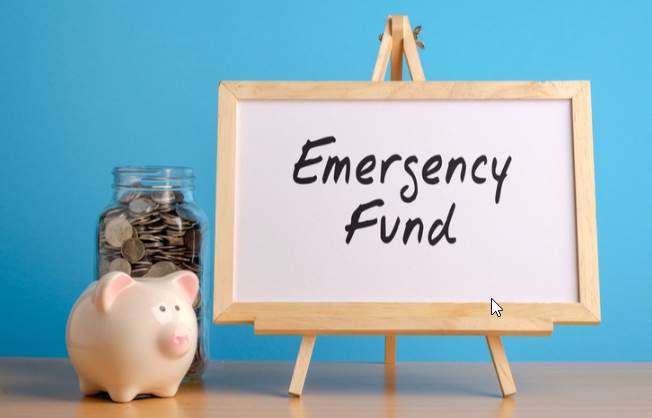
How to build an emergency fund even if you earn little is not just a financial tactic; in Nigeria’s volatile economic climate, it is an act of personal resilience and a fundamental step towards peace of mind. When fuel prices jump without warning, medical bills arrive unexpectedly, or a family obligation becomes urgent, the difference between weathering the storm and being swept into debt often boils down to one thing: a financial cushion. The common myth is that building this safety net requires a large salary. This belief paralyzes many hardworking Nigerians, from the civil servant in Abuja to the market trader in Onitsha, making them feel financially vulnerable month after month. The truth is far more empowering: the discipline and strategy of building the fund matter more than the amount you start with. This comprehensive guide is designed to demystify the process, strip away the intimidation, and provide you with a realistic, step-by-step blueprint to create your own emergency fund—no matter your current income level. It’s about making your money work for your security, one deliberate Naira at a time.
Why Your Emergency Fund is Your Most Important Financial Asset
Before diving into the “how,” it’s critical to internalize the “why.” An emergency fund is not savings for a new phone or aso ebi; it is a designated pool of money reserved exclusively for true, unforeseen financial shocks. In a country where formal social safety nets are often weak and employment can be unstable, this fund becomes your personal insurance policy.
Shifting Your Mindset from Scarcity to Strategy
The first barrier for many is a scarcity mindset. When you look at your monthly take-home of, say, ₦80,000 after deductions, and see expenses of ₦75,000, saving seems like a mathematical impossibility. This mindset focuses on what’s left over. The strategic approach, which we will build, focuses on paying your future self first. It requires you to treat your emergency fund contribution as a non-negotiable expense, just like your rent or transportation. This small cognitive shift—from “I’ll save what’s left” to “I save first, then spend what’s left”—is the foundational key to success. It moves the emergency fund from a hopeful wish to a mandatory line item in your personal finance ledger.
The Nigerian Context: What Counts as a ‘True Emergency’?
To prevent dipping into the fund for the wrong reasons, you must define what constitutes an emergency in your life. A true emergency is an unexpected, necessary, and urgent expense that threatens your health, safety, or ability to earn an income. In practical Nigerian terms, this includes:
-
Medical Emergencies: Sudden illness or accident requiring payment for tests, medication, or hospital bills not fully covered by the NHIS or employer HMO.
-
Critical Home or Vehicle Repairs: A leaking roof during rainy season that could cause greater damage, or a major car breakdown that prevents you from getting to work.
-
Sudden Loss of Income: An unexpected job loss, a drastic reduction in clientele for your business, or being placed on unpaid leave.
-
Essential Family Obligations: A dire situation involving an immediate family member that genuinely requires your financial intervention for basic needs.
Conversely, a planned expense like school fees, a wedding contribution, or a holiday is not an emergency. These should be planned for with separate savings goals. The clarity of this definition protects your fund and ensures it’s there when you genuinely need it.
The Practical Blueprint: A Step-by-Step Guide to Building Your Fund
This is the core of the process. We break down the monumental task of “building an emergency fund” into small, manageable, and non-intimidating actions.
Step 1: Conduct a Ruthless Financial Audit
You cannot plan a journey without knowing your starting point. For one month, track every single kobo you spend. Use a notebook, a notes app on your phone, or a simple spreadsheet. Categorize your spending: Food, Transport, Utilities (like electricity and data), Rent, Ajo/Esusu contributions, etc. The goal is not to judge, but to observe. You will almost certainly identify “leakages”—small, habitual spends that add up significantly. That daily ₦500 on snacks and soft drinks? That’s ₦15,000 a month. This audit reveals the hidden potential in your current cash flow.
Step 2: Set Your Initial Target: Think “Starter Fund”
The classic advice is to save 3-6 months of living expenses. For someone earning little, that figure can be so daunting that it leads to inaction. Do not start there. Your first goal should be a “Starter Emergency Fund” of ₦20,000 to ₦50,000. This might cover a basic medical bill, a minor repair, or a week’s worth of essential groceries if income is interrupted. This small target is psychologically powerful. It’s achievable within a few months and provides a tangible, early win that builds your savings muscle and confidence. Achieving this first milestone proves to yourself that you can do it.
Step 3: Choose Your Battlefield: Where to Keep the Money
This fund must be safe, separate, and slightly inconvenient to access. It should not be mixed with your regular current account, where it’s too easy to spend.
-
A Dedicated Savings Account: Open a separate savings account, preferably with a different bank from your main one. Many Nigerian banks offer low-maintenance savings accounts. The minor friction of having to make a transfer to access it creates a crucial mental barrier against impulse use.
-
A Digital/Mobile Money Box: Platforms like PiggyVest, Cowrywise, or even your bank’s “Savings” or “Target Savings” product are excellent. They allow you to create a specific goal (e.g., “Emergency Shield”), set automatic deductions, and often offer better interest rates than a regular savings account. The key is to use a product with withdrawal delays or penalties that deter casual dipping.
-
Physical Ajo (Thrift Contribution): If you are part of a trusted, small Ajo circle, you can designate your contribution as your emergency fund. When your turn to collect comes, you immediately deposit that lump sum into your dedicated savings account. This leverages a familiar Nigerian system for disciplined accumulation.
Step 4: The Engine of Growth: Automate and Increment
Willpower is a weak strategy. Automation is your strongest ally.
-
Automate Transfers: Set up a standing instruction with your bank or on your savings app to transfer a fixed amount from your primary account to your emergency fund account immediately after you receive your salary or main income. Start small—₦1,000, ₦2,000, ₦5,000. The amount is less important than the unwavering habit. This is the “pay yourself first” principle in action.
-
Harness Windfalls: Any unexpected money—your annual bonus, OGA dash, tax refund, or monetary gifts—is prime fuel for your emergency fund. Commit 50-70% of any windfall directly to the fund. It dramatically accelerates your progress without affecting your daily budget.
-
The “Spare Change” Strategy: At the end of each day or week, round down your account balance and transfer the “change.” If you have ₦47,380, transfer ₦380. Use a money-box app that rounds up your card transactions and saves the difference. These tiny amounts accumulate silently but significantly.
Advanced Strategies for the Nigerian Earner on a Tight Budget
When your essential expenses consume most of your income, you need creative and aggressive strategies to create savings space. This is where grit meets ingenuity.
Radical Budgeting: The 50/30/20 Rule Adapted for Nigeria
A popular budgeting framework is the 50/30/20 rule: 50% on Needs, 30% on Wants, 20% on Savings/Debt. On a low income in Nigeria, the 20% savings may not be feasible initially. Adapt it as a guiding star.
-
Needs (55-65%): Rent, food staples, minimal transport, utilities. Scrutinize every item here. Can you reduce your data plan? Can you cook more at home instead of buying food? Can you carpool?
-
Wants (15-25%): Data for entertainment, snacks, new clothes, owambe contributions. This is your primary area for surgical cuts. Reducing this category by just 5% can fund your initial automated savings transfer.
-
Savings & Debt Repayment (10-20%): This is the category for your emergency fund and paying off high-interest debt (like credit card or okada loan balances). Start with whatever percentage you can, even if it’s 5%.
Creating New Income Streams: The Side Hustle Mandate
Sometimes, cutting expenses has a hard limit. Increasing your income is the most powerful lever. The Nigerian gig economy is booming. Consider dedicating a few hours a week to a side hustle with an immediate or quick payout, and funnel 100% of that income directly into your emergency fund until your “Starter Fund” is complete.
-
Digital Skills: Virtual assistance, social media management, or content writing for small businesses.
-
Leverage Existing Skills: Tutoring, tailoring, baking, or making hair for a close circle.
-
Selling Items: A deliberate decluttering of your home to sell unused items on Facebook Marketplace or in your estate can generate a surprising initial lump sum for your fund.
The crucial point is to ring-fence this new income. Do not let it blend into your daily spending; its sole purpose is to build your financial fortress.
Navigating Social and Family Pressures
This is perhaps the most challenging aspect in our culture. How do you say “I don’t have money” when you are secretly building a fund? You must learn to set gentle but firm boundaries.
-
Budget as Your Ally: You can honestly say, “My budget for that this month is already exhausted,” or “I have allocated my money for the month already.”
-
The “Delay” Tactic: For non-urgent requests, “Let me check and get back to you next week” gives you time to assess if you can help from a non-emergency fund source.
-
Prioritize Your Security: Remember, a complete financial crisis where you need to borrow from others is a greater burden on your family than politely declining a non-essential request today. Your long-term stability enables you to be a stronger support in a genuine future crisis.
What to Do After You Hit Your First Target
Congratulations! Hitting your ₦50,000 “Starter Fund” target is a massive achievement. Now, you evolve your strategy.
Transitioning to a Full Emergency Fund
With your saving habit solidified, recalculate your essential monthly living expenses (just Needs, no Wants). Your new, long-term target is 3-6 months of that figure. Break this large number into your next milestone (e.g., “3 Months Expenses: ₦180,000”). Continue your automated savings, but now also look to increase the amount whenever you get a raise or your side hustle becomes more stable.
Replenishing the Fund After Use
The day will come when you need to use the fund for its true purpose—a medical bill, a major repair. This is not a failure; it is a success. The system worked exactly as designed. Once the emergency has passed, your immediate financial priority shifts from other savings goals back to replenishing the emergency fund. Temporarily pause other savings and channel all extra resources back into the fund until it is restored to its full level. This maintains your financial shield.
Integrating Your Fund into a Broader Financial Plan
Your emergency fund is the bedrock. Once it is secure, you can confidently build upon it with other goals. This fund gives you the stability to invest in a Smarter Investment Strategy for Beginners without the fear of needing to sell in a panic. It provides the breathing room to aggressively pay down bad debt, knowing an unexpected expense won’t push you deeper into the red. It is the foundation upon which true wealth-building is built, as detailed in our guide on Creating a Personal Budget That Actually Works in Nigeria.
Common Pitfalls to Avoid on Your Journey
Awareness of these traps will help you navigate around them.
-
Using it for Non-Emergencies: The biggest threat. Revisit your “true emergency” definition frequently. The temptation to use it for a “great deal” or a social event will be strong. Resist.
-
Keeping It Too Accessible: If it’s in your main account or a free-transfer savings account, you will spend it. Ensure there is a procedural delay in accessing it.
-
Comparing Your Progress to Others: Your journey is personal. Someone earning ₦500,000 saving ₦50,000 is not achieving more than you earning ₦100,000 saving ₦10,000. Both are saving 10%. Focus on your percentage rate, not the absolute Naira figure.
-
Giving Up After a Setback: If you have to dip into it or miss a month’s contribution, do not abandon the mission. See it as a marathon, not a sprint. Simply restart your automated transfer next month. Consistency over time always wins.
Building an emergency fund on a low income is a profound demonstration of self-care and financial intelligence. It moves you from a position of reactive anxiety to one of proactive control. By starting small, leveraging technology to automate your habits, and creatively managing your income and social pressures, you can construct this critical financial buffer. How to build an emergency fund even if you earn little is, therefore, a learned skill of persistence and strategy. Begin today with your financial audit. Open that separate savings account. Set up that first standing order for ₦1,000. Your future, more secure self will thank you for the peace of mind that no market volatility can ever take away. What is the one small step you will take this week to start building your financial safety net?